Golden Bricks Team • 15 Aug 2026
Brick Cladding Sizes Explained: Which Dimension Fits Your Wall

Most people shopping for exposed brick walls focus on colour first and size last. That's backwards. Size decides how many courses fit in a metre of wall, how heavy the finished cladding is, whether it needs a structural check before installation, and — more than anything else — whether the wall reads as "real brick" from across a room or gives itself away as a thin tile up close.
Here's what each dimension in our range actually does, and how to pick between them.
Why cladding tiles are 20mm thick, not 75-110mm like a real brick
A standard fired clay brick used in Indian construction runs somewhere around 230mm x 110mm x 75mm for the older non-modular size, or 190mm x 90mm x 90mm for the BIS modular size. That's a full structural unit — it carries load, needs mortar beds, and adds serious weight to a wall.
Brick cladding tiles skip all of that. Ours are cut to roughly 20mm thick — about a fifth the depth of a full brick — because the tile only needs to show a face, not bear weight. A 20mm slice fixed with tile adhesive can go straight onto plastered brick, concrete, plywood, drywall or even a column, with no foundation loading calculation and no mason laying individual bricks in mortar. That's the entire reason cladding exists as a category: same visual result, a fraction of the weight and labour.
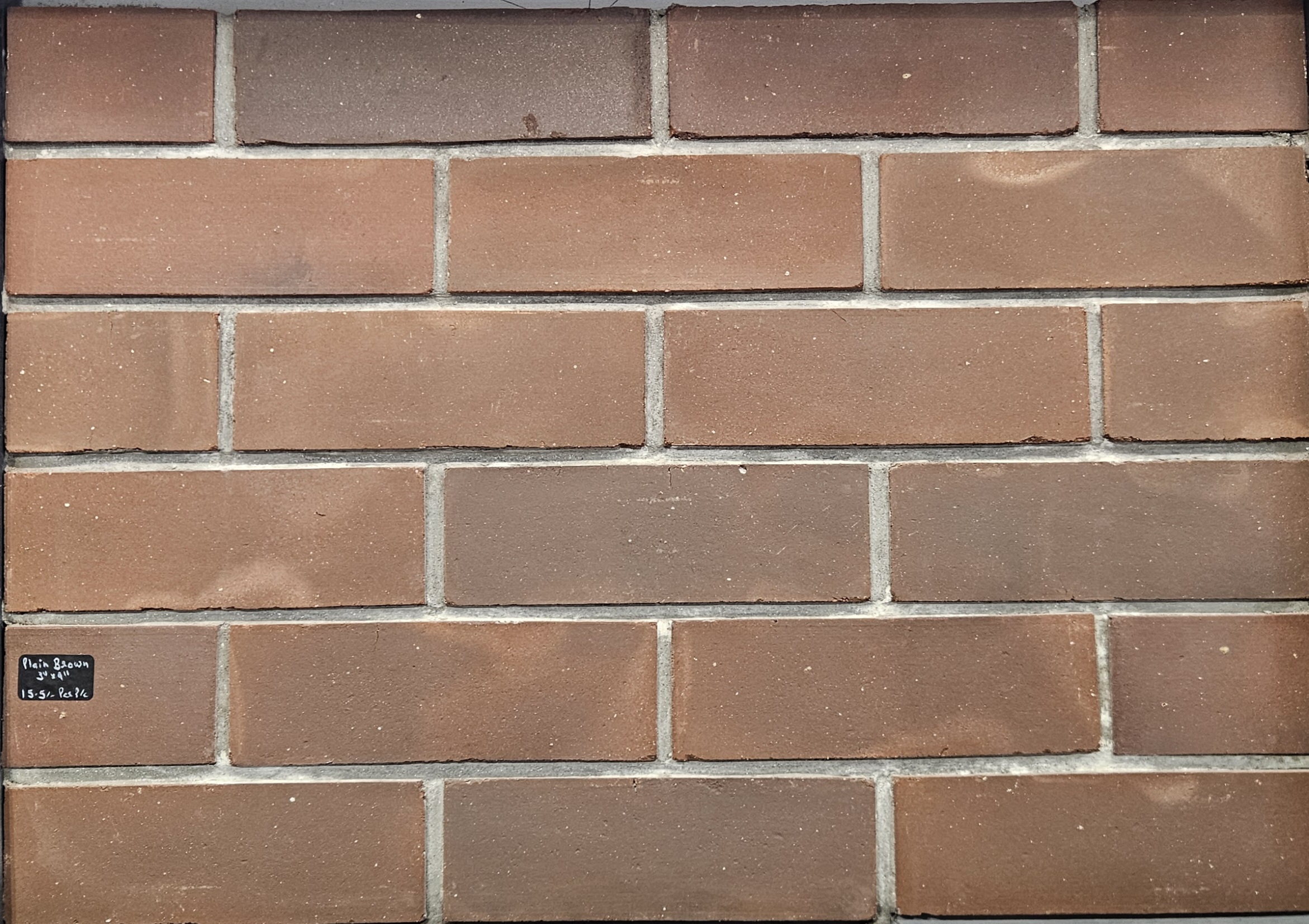
9"x3", 9"x2" and 9"x1.5" — what the height actually changes
All three keep the 9-inch (228mm) length, which matches the face length of a traditional Indian brick, so the wall still reads as brickwork at a glance. What changes is the height of each course, and that changes the rhythm of the joint lines:
9"x3" is the closest match to a real brick course. If you want the wall to look indistinguishable from actual masonry, this is the safe default — it's what most contractors ask for first.
9"x2" gives you more joint lines per foot of wall height, which reads as a tighter, more graphic pattern. It suits smaller feature walls where you want the brick texture to feel dense rather than open.
9"x1.5" is the slimmest option — closer to a soldier-course or brick-slip look than a full course. It's popular for accent bands, kitchen backsplashes and places where a heavier 3" course would visually overwhelm the space.
Handmade sizes: 9"x3"x30mm and 6"x3"x25mm
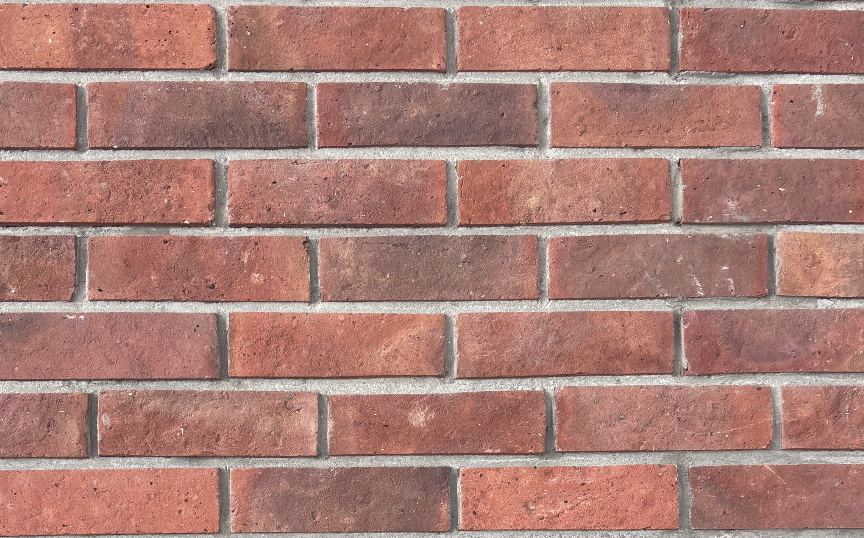
The handmade series isn't cut on a press — each tile is shaped by hand and fired individually, which is why the sizes run slightly thicker (25-30mm against the pressed range's 20mm) and why no two tiles are perfectly identical. That irregularity is the entire appeal: it's what makes a handmade wall look genuinely old rather than deliberately "distressed." The 6"x3"x25mm size in particular is closer to a traditional small-format brick and works well where the rest of the room already has heritage detailing.
Working out how many tiles you need
This is the part most people get wrong, because they calculate based on the tile's face size and forget the joint gap adds to the effective coverage per tile. With a typical 10mm joint:
A 9"x3" tile occupies roughly 0.22 sq ft of wall including its joint, which works out to about 4.5 tiles per square foot. Drop to 9"x2" and joint-inclusive coverage falls to around 0.14 sq ft per tile — call it 7 tiles per square foot. The 9"x1.5" size needs close to 9 tiles per square foot. Always order 8-10% extra to cover cuts around corners, switches and windows — offcuts from a 9" tile rarely reuse cleanly on the next row.
Which size for which wall
For a full exterior facade or a large living room feature wall, 9"x3" smooth or texture gives the most convincing, least busy result. For a compact space — a kitchen island, a bar counter front, a bathroom accent strip — 9"x1.5" or 9"x2" keeps the pattern from feeling heavy in a small field of view. Restaurants and cafes going for an industrial or reclaimed look tend to reach for the handmade sizes specifically because the irregularity photographs better under warm lighting.
All three pressed sizes are in stock in both Smooth and Texture finish on our brick cladding tiles page, alongside the handmade range. If colour is your next question, we've broken down how clay colour actually works — including why the same size looks different in terracotta, brown and red — in a separate guide. And if you're trying to work out a budget before calling us, the brick cladding price guide covers what actually moves the number up or down.
Golden Bricks Co. presses and fires all of these sizes in-house at our Ambala facility, which is also why we can hold tight tolerances across a bulk order — tiles from the same batch stack evenly, which matters more than people expect once a wall is halfway done. If you're an exposed brick supplier search away from a decision, send us your wall dimensions and we'll tell you exactly how many pieces and what it'll cost.

